In a stunning diplomatic fallout, Ukrainian President Volodymyr Zelenskyy was abruptly dismissed from the White House following an unsuccessful meeting with U.S. President Donald Trump. According to sources, what was supposed to be a crucial discussion on continued U.S. support for Ukraine turned into a tense standoff, leading to an unceremonious ejection of Zelenskyy and his delegation. Even the planned luncheon remained untouched outside the meeting room, later consumed by White House staffers.
As reporters scrambled for answers, Zelenskyy was bombarded with questions regarding the fate of a minerals deal and whether his negotiations had completely collapsed. The Babylon Bee, known for its satirical takes, summed up the situation by mocking Zelenskyy’s strategy, highlighting how his diplomatic approach seemingly backfired. Rather than securing support, his interactions with Trump deteriorated into a confrontational exchange.
During the meeting, Zelenskyy made remarks suggesting that Americans did not fully grasp the implications of the war but would feel its consequences in the future. Trump, visibly unimpressed, cut him off, rebuking him for attempting to dictate how the U.S. should perceive global affairs. “You don’t tell us how we’re going to feel,” Trump retorted, making it clear that he was not willing to be lectured.
The discussion took another sharp turn when Trump bluntly pointed out Ukraine’s dire situation. “You’re not winning,” he told Zelenskyy, emphasizing that Ukraine’s survival hinged on U.S. military and financial assistance. “This war would have been over in two weeks without our equipment,” Trump stated, underscoring the extent of American aid. He made it clear that the U.S. was not an endless ATM and that if Zelenskyy wanted continued support, he needed to play by Trump’s rules.
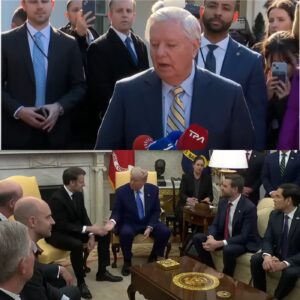
As the meeting progressed, Trump laid out his position unequivocally. “You either make a deal, or we’re out. And if we’re out, you’ll fight it out on your own,” he warned. For Zelenskyy, who has largely depended on Western backing, this message signaled a major shift in U.S. policy. Trump’s stance was clear: no more blank checks for Ukraine.
Trump’s firm approach sent shockwaves through Washington, prompting reactions from both political allies and critics. Even Senator Lindsey Graham, once a staunch advocate for Ukraine, expressed disappointment in Zelenskyy’s conduct, calling his attitude “disrespectful” and suggesting that future negotiations might be impossible under his leadership.
The fallout left many questioning Zelenskyy’s diplomatic acumen. Once hailed as a hero in Western media, he now found himself at odds with the very country that had funneled billions into his war efforts. Critics pointed out that his increasingly authoritarian measures in Ukraine—such as banning Orthodox churches and curbing free speech—were beginning to sour his image among American policymakers.
In a later interview with Bret Baier, Zelenskyy attempted to soften his stance but stopped short of an apology. He maintained that Ukraine remained grateful for U.S. support but insisted that their struggle was a fight for democracy. However, his refusal to acknowledge his missteps further alienated his critics.
Ultimately, the public spat between Trump and Zelenskyy exposed the growing rift in U.S.-Ukraine relations. Trump’s message was clear: American interests come first, and Ukraine must prove its worth if it wants continued backing. The days of unconditional support appear to be over, and Zelenskyy now faces the reality of securing his country’s future without taking U.S. aid for granted.
News

Nolwenn Leroy : Les Révélations Poignantes de ses 42 ans sur “l’Amour de sa Vie”
Dans l’univers parfois impitoyable du show-business français, rares sont les artistes qui parviennent à maintenir une frontière étanche entre les…
Julio Iglesias à 81 ans : Entre aveux sincères, secrets de famille et vérité sur sa santé, la légende se livre enfin
Julio Iglesias n’est pas seulement une voix ; il est un mythe vivant, une icône de la romance qui a…

Isabelle Nanty : Le combat secret d’une icône entre la vie et la mort après une hospitalisation critique
Le monde du cinéma français a retenu son souffle. Isabelle Nanty, figure emblématique et solaire de nos écrans, a traversé…
CLASH EXPLOSIF : Louis Boyard et Apolline de Malherbe, le duel qui a embrasé le direct !
L’arène médiatique a tremblé ce matin. Ce qui devait être une interview politique classique s’est transformé en un véritable champ…
Jean-Pierre Foucault en deuil : Les adieux déchirants à Marie-José Tramoni, la seule femme qu’il ait jamais épousée
Le paysage médiatique français est en émoi. Derrière l’image de l’animateur infatigable, toujours prêt à distribuer sourires et bonne humeur…
Sarah Knafo “rhabille” la gauche : le choc des vérités sur le Venezuela !
Le séisme politique : Sarah Knafo face à l’aveuglement idéologique Le paysage médiatique français vient d’être le théâtre d’une déflagration…
End of content
No more pages to load